HR & internal organisation

Occupational risk management

Continuous risk assessment and action plans — France & Belgium regulations.
  • Business rules
  • Full audit trail
  • Mobile app
  • Document generation
Klaro Cards — Occupational risk management

What this module does

The occupational risk assessment (DUERP in France, PGP in Belgium) is a regulatory obligation that most SMEs treat as a periodic paperwork exercise.

Klaro Cards turns it into a living process: risks are identified, evaluated and linked to prevention actions that are tracked continuously — not reconstructed the week before the inspection.

Features you'll love

Business rules Validation rules, automations and workflows written in business language, not code. Your teams configure their own processes.
Full audit trail Every change is tracked with who, what, when. When an auditor asks for the history of a record, you open the card — not a filing cabinet.
Mobile app Track information on the field, take pictures, report an incident — online or offline, from any smartphone.
Document generation Export any board or card to PDF or HTML. The layout is automatic, clean and audit-ready.

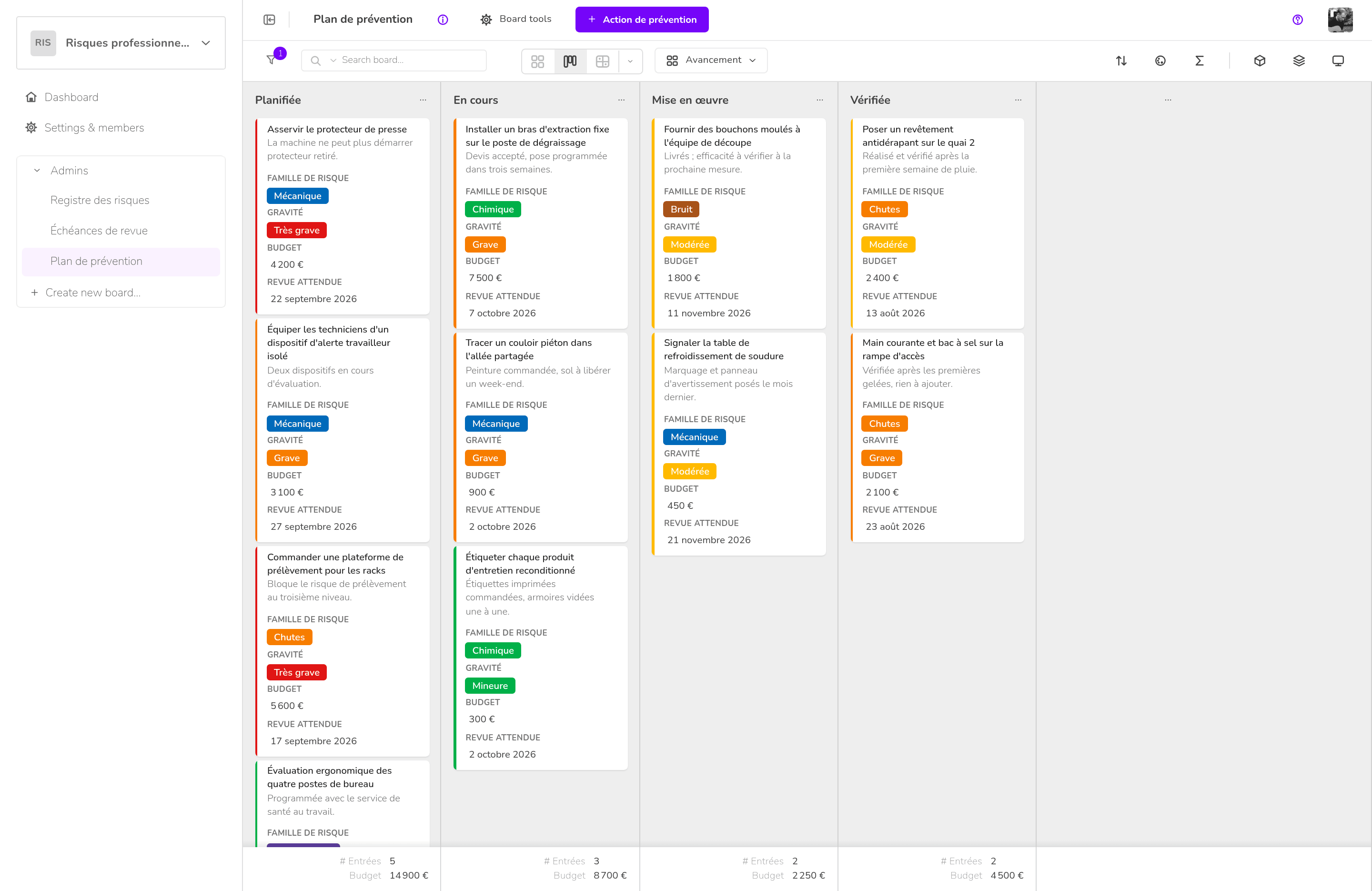
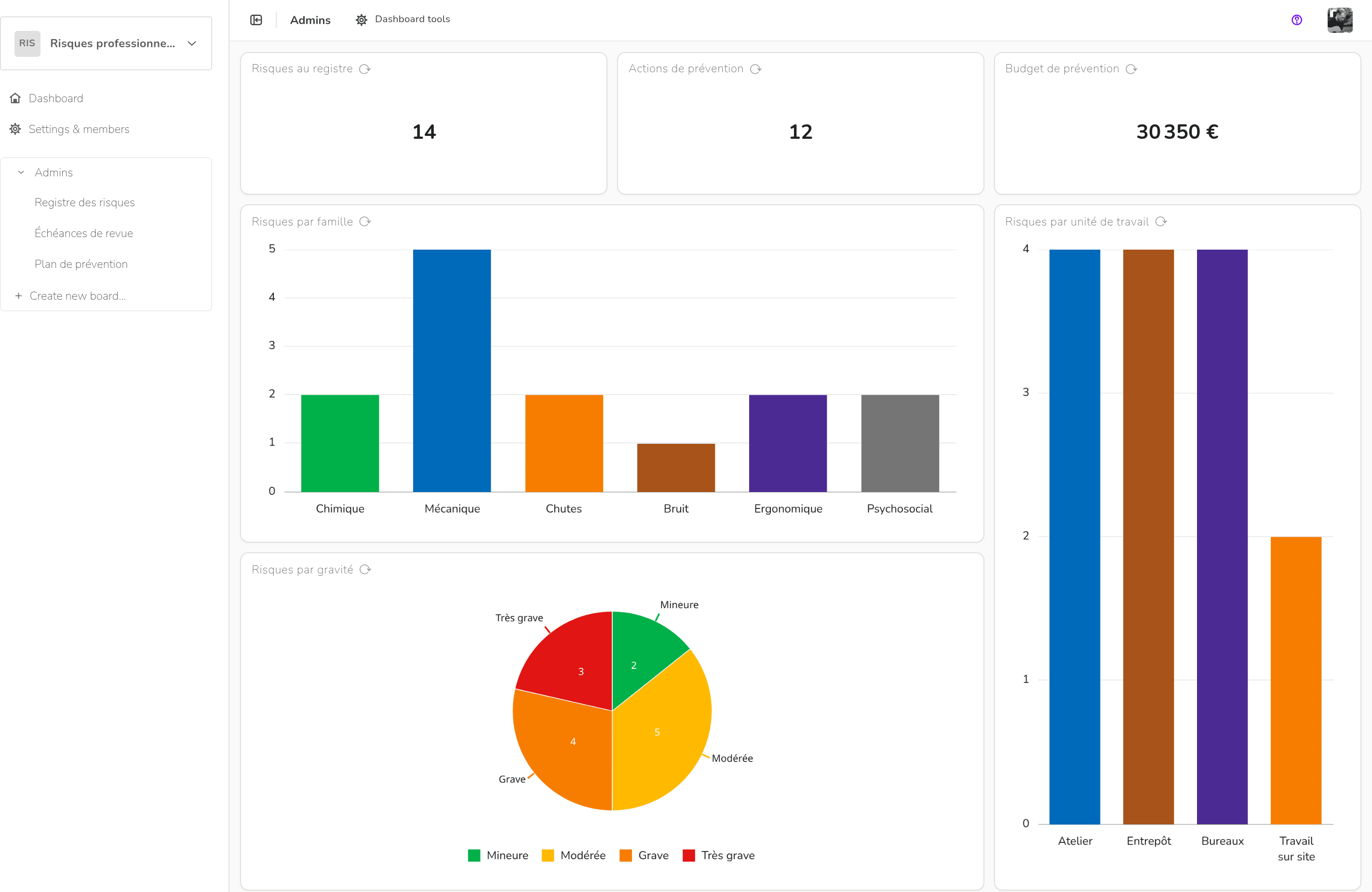
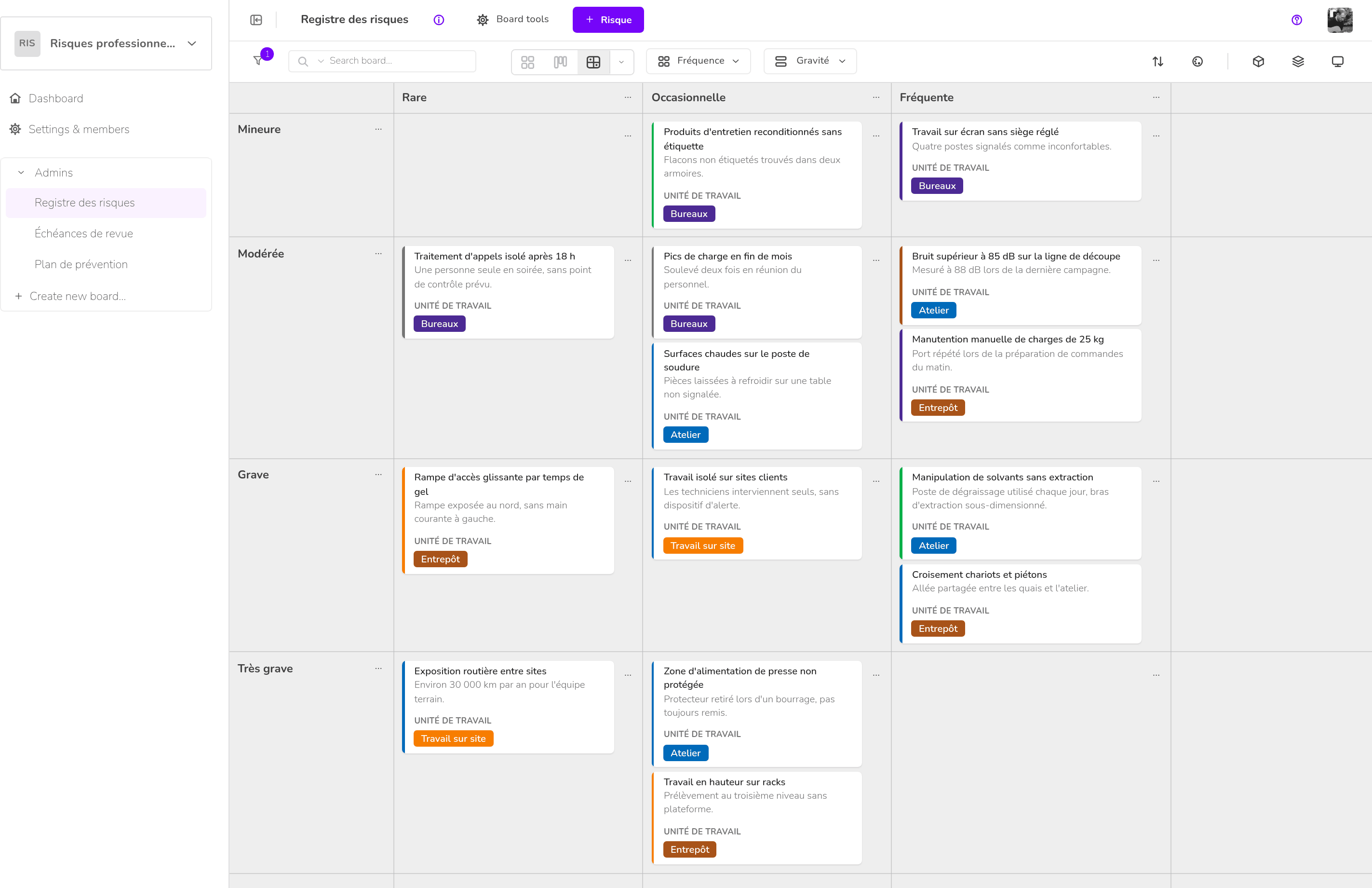
The module at work

The screens of the week. Click to move from one to the next.

These screens exist on mobile too, offline included.
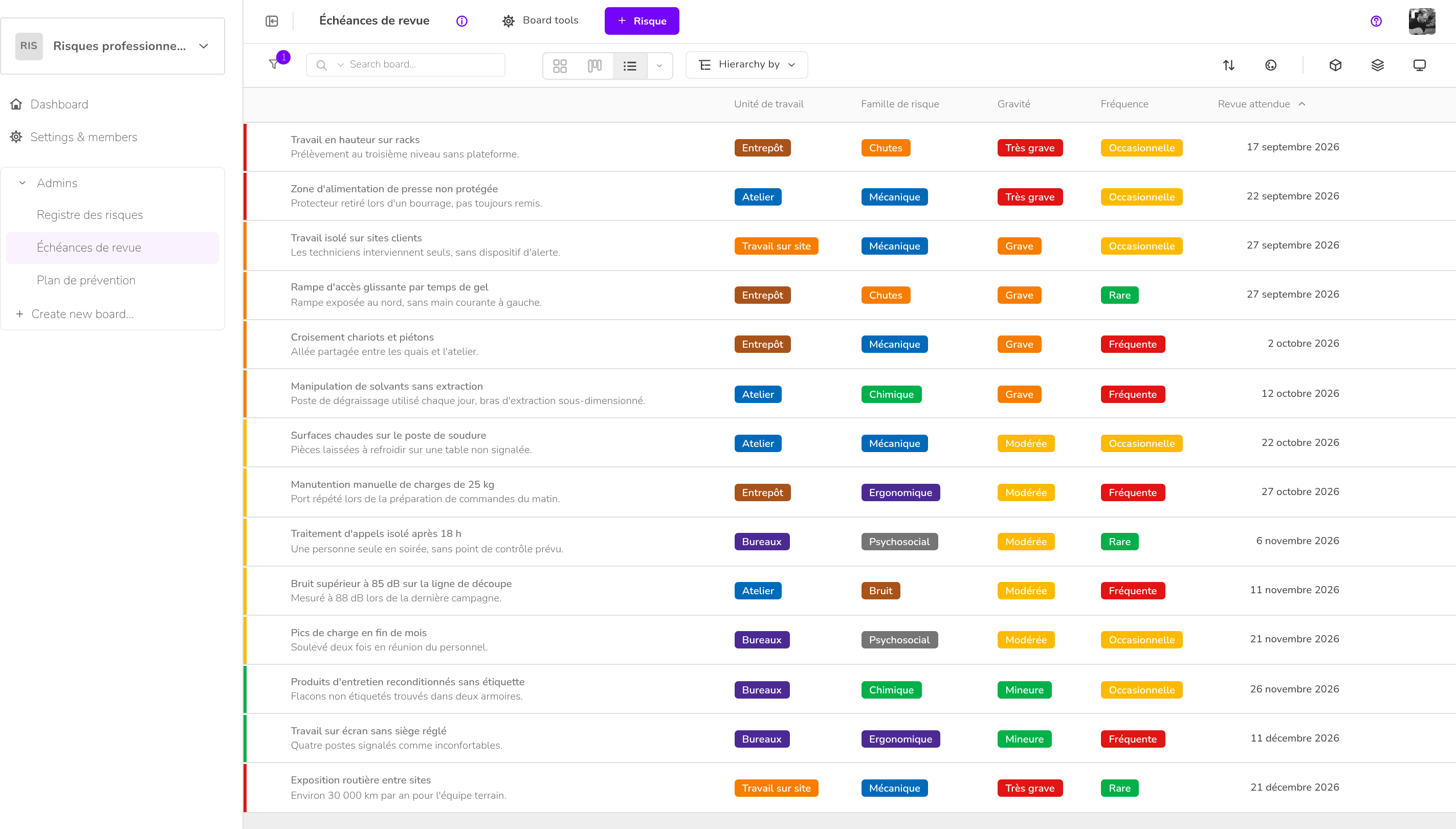
Occupational risk management — Review deadlines A real Klaro Cards screen

Sectors that use this module

The same module, set up differently depending on what you have to prove, and to whom.

Price

This module costs

from 25 € / user / month

On its own, one module. The rate drops as soon as you add a second, and you can change formula at any time.

Book a call See every formula

No commitment · data hosted in Europe

Frequently asked questions

Is Klaro Cards suitable for regulated industries?

Yes. The full audit trail, role-based access, validation workflows and document generation make Klaro Cards suitable for ISO, GMP, IATF and other compliance frameworks. Several pharmaceutical and industrial clients use it for their regulated processes.

How quickly can we get started?

A first module is typically operational within a few days. There is no multi-month deployment project. Start with the module that addresses your most painful friction, measure the result, and expand from there.

Do I need technical skills to use it?

No. Business rules are written in business language, not code. Your teams configure and adjust their own processes. IT only gets involved for integrations with your existing systems, if needed at all.

Ready for the next step?

Fifteen minutes to look at your operational friction with you, and see which modules answer it.